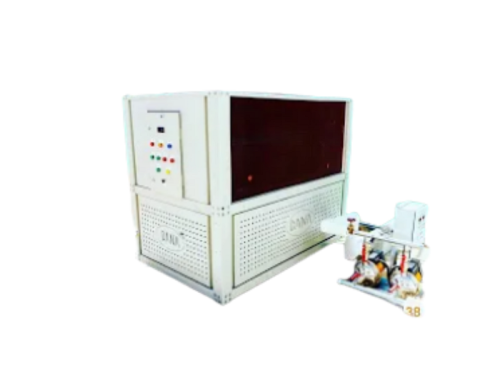
Hydroponics Farming Water Chiller System.

Plants are grown in nutrient-rich, water-based solutions rather than soil in hydroponics, a kind of hydroculture. Hydroponic systems, like traditional nurseries, rely on sunlight or grow lights to ensure healthy crop development. Temperature control is particularly important when growing plants hydroponically since different plants thrive at different temperatures. Cucumbers, for example, do well in warmer climates. Using water-cooled systems, reflective metal to screen the reservoir from ambient heat, or investing in a hydroponic water chiller are just some of the options for controlling the ambient temperature of hydroponic reservoirs. Industrial chillers have the highest cooling efficiency of any of the temperature control systems.
Chiller System for Hydroponics
A hydroponic chiller is a device that cools hydroponic reservoirs during the procedure. The growth of your plants might be hampered by high water temperatures. The appropriate water temperature for hydroponics promotes a healthy balance of oxygen consumption and plant metabolism. This can range from 59 to 86°F for commercially cultivated plants. The basis of operation for hydroponic water chillers is the same as for industrial chillers. The nutrient-rich fluid circulates through the chiller, which has cooling coils that chill it to the necessary temperature.
Hydroponic Water Chillers Have a Lot of Advantages.
Temperature control in hydroponic cultures may be achieved with the use of industrial chillers, which aids plant development. Over alternative process cooling methods, a water chiller system for hydroponics has the following advantages:
- Suitable for large-scale hydroponic systems
- Some manufacturers provide bespoke chiller sizes
- High-efficiency cooling with dependable operation
- Process temperature monitoring and regulation via remote control using PLCs

Organic Foods in Cold Storage
Traditional staples like rice and sugar, for example, had to be sanitary and cheaper to compete with market prices, therefore organic food and beverages were in high demand. People are willing to pay a 20% premium for organic food that is supposed to be pesticide-free. While there is a greater need for these foods due to the big population and demand, there is also a greater demand for production area and distance from the farm to the customer. In this situation, safe storage of organic food is critical since its production costs are higher, and any damage to the food would result in a significant loss for the producers. The importance of a smart cold storage system in maintaining the quality and affordability of these commodities cannot be overstated.
Technology
- Cold storage systems are used to keep a variety of foods in numerous places throughout the world. It is indicated that, in addition to cold chain facilities, it is necessary to preserve quality owing to the country’s high ambient temperature.
- Onions, sugar, rice, poha, vegetables, legumes, and other foods should not be stored until they have been sufficiently dried, either naturally or artificially. The neck tissue and outer scales must be dried until they rustle when handled, otherwise the bulbs will rot in storage.
- A lower temperature regulates the sprouting of dry foods. Temperatures of 10 to 25 degrees Celsius are ideal for sprouting. Rooting is affected by relative humidity (RH). The greater relative humidity there is, the more rooting occurs. For maximum long-term preservation of these commodities in cold storage, consider the bulb size, cultivar selection, cultivation practises, harvest timing, field curing, top removal, drying, grading, packing, and storage conditions (optimum storage range of relative humidity 65 per cent to 70 per cent with the temperature ranging between -4C to -6C).
The following are the most significant characteristics of cold storage structures:
- Use of RCC roofs or other appropriate materials with insulation to prevent excessive temperatures from building up within.
- More slope and increased centre height for improved air circulation and to prevent damp microclimates inside cold storage chambers.
- Providing bottom and side ventilations to allow for unrestricted and quicker air circulation and to prevent hot and damp pockets from forming between onion layers.
- To avoid sun burn, colour fading, and quality deterioration, avoid exposing meals to direct sunlight or rain water.

Agriculture and Horticulture is a thriving industry.
- Fruit and vegetable cold storage, as well as floral cold storage, extends the life of your product. Outside of a temperature-controlled facility, produce will be subject to outdoor temperatures and other influences.
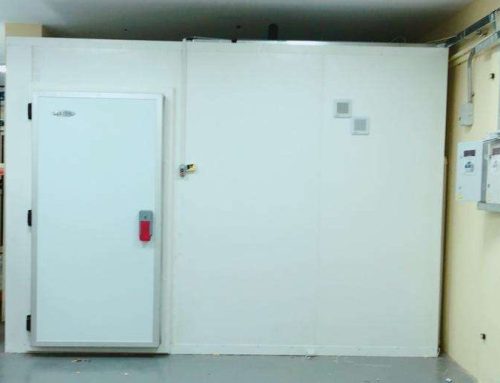
- A chiller cold room will keep your items cold and retain their quality by maintaining temperatures between +2°C and +8°C (or whatever temperature range you desire).
- A temperature-controlled room also regulates other parts of the atmosphere, ensuring that your fruits, vegetables, flowers, and other produce are kept in a clean and food-safe setting. Chiller cool rooms are not only great for storing fruit, but they’re also great for food preparation. Chilled spaces were frequently utilised by farms and enterprises with packaging and preparing rooms to maintain the integrity of the products while they were being processed.
In the Cold Chain, How Modern Freezers and Chillers Improve Food Safety
Those who are new with industrial freezers and chillers will be amazed at how many features today’s models offer to the food processing industry. Today’s technology, from electronic sensors to remote access and maintenance, respond to the need for enhanced food safety measures both upstream and downstream. Microbial activity is the leading cause of food decomposition. The “danger zone” between 40°F and 140°F, where bacteria growth is exponentially greater in food processing processes, is where this sort of activity is most active. Chillers and freezers employ tailored air flow at lower temperatures than those typically used for storage to swiftly remove heat from food and bring it down to safe and consistent levels. This sort of microbial activity is inhibited or even prevented when processed foods are promptly brought down to temperatures below 40°F. Eliminating microbial activity not only extends the shelf life of the food, but it also prevents the formation of hazardous microbials such as mould and bacteria like listeria and E. coli, which may cause serious disease and even death if consumed.
Things to consider when installing or upgrading freezers and chillers?
People who are new with industrial freezers and chillers are sometimes astonished by the variety of features available. Most of the time, the equipment is larger than expected, therefore space might be an issue. This is especially important in existing facilities since there is frequently additional equipment upstream and downstream from the freezer that must be included in the overall layout.
The expenses of acquiring the freezing or chilling equipment may be more than anticipated up front, but the prices of other connected equipment, such as compressors required to deliver refrigeration to the unit, are frequently unexpected. People are accustomed to purchasing a refrigerator or freezer and plugging it in as a standalone appliance.
Industrial freezers are more complicated, and they usually necessitate the construction of a separate refrigerated chamber to house all of the necessary components. When upgrading existing facilities, they must consider how to remove old equipment and replace it with new, as well as how to assemble the new. The configurations and sizes of equipment are frequently different from those of current units, posing new issues. Changes to refrigeration pipes, electrical panels, and plant construction are common, and they all come with large expenditures.

Benefits of a chiller cold room from DANA
The DANA Chillers team will collaborate with you to fully comprehend your chiller cold room requirements. We want to learn how we can assist your company in improving its operations and designing a long-lasting cold storage system.
We only collaborate with manufacturers that are at the forefront of innovation and research and development, and we only employ high-quality items. What does this imply for you personally?
The materials we select to construct your cool room will be food-safe, easy to clean, long-lasting, and provide the finest insulation. This implies that your cold room will be created to last, to serve a specific function, and to suit your requirements.
DANA Chillers can source, design, and install every component of cold storage, from the cold room panels and doors to the flooring and refrigeration. As a consequence, you can rely on us to be your one-stop shop.
Cold room doors that are insulated are an integral feature of any walk-in chiller. Agricultural companies typically require forklift or pallet truck access to their storage facilities in order to move large quantities of produce at once. Our high-speed doors use an automated door opening and closing system to maintain consistent inside temperatures. DANA Chillers also has a number of smaller insulated door alternatives, such as hinged and sliding doors, that allow pedestrian and cage access.
When it comes to developing and installing cold rooms and ambient areas for the agriculture and horticulture industries, DANA Chillers has a wealth of experience. Get in contact with us today to learn more about how a cooler cold room might benefit your business. We’ll answer any questions you have and provide you a quote. You may reach us by phone at 00971-4-2217273, by email at info@danagroups.com / info@danawatercoolers.com.
The Product Ranges Offered by DANA WATER HEATES & COOLERS FACTORY LLC are :->
- DANA Stainless Steel Drinking Water Coolers – Our 2-5 tap Drinking Water Coolers & Fountain type water coolers are specially designed for the harsh gulf climatic conditions and come in models ranging from 25-250 Gln Cooling Capacities ( 2-5 taps). Our products are supplied to various construction sites,schools,mosques,labor camps,accomodations,hotels,factories,homes across the UAE and Neighboring Gulf/GCC Countries.
- DANA Air Cooled Water Chillers – Our Air Cooled Water Chillers/ Process Water cooling Systems are manufactured in capacities ranging from 2 TR – 100 TR Refrigerated Cooling Capacity.From Domestic Overhead Tank Water Cooling Solutions to Complex Industrial Process Water Cooling Solutions our DANA Water Chillers,are specially designed keeping in mind the harsh climatic conditions in the Middle East & Gulf Region.
- DANA Water Tank Cooler – Tank Water Cooling System – Our Domestic water chillers are specially made to withstand the High Ambient Temperature of Middle East. Every Summer The Problem of BOILING HOT Water From Taps & Showers is Now Solved by DANA Domestic Water Tank Coolers which cool water to up to 20 degrees Celcius and are ideally suited up to 1000 Gallons storage capacity water tank.
- DANA Swimming Pool Heat Pumps – Our swimming pool heat pumps are specially fitted with Titanium Heat Exchangers and Scientifically Designed Reverse Solenoid valves,inorder to give the end user a user adjustable temprature from 20 degrees to 32 degrees Celcius,which is comfortable for the human body.
- DANA Cold Room Solutions – Our Cold Room Solutions encompass complete turnkey supply & installations of complex chillers,freezers,mortuary rooms,flower cold rooms,ripening chambers,walkin chillers,skid-mounted portable cold chain solutions.Our Sister Concern M/s DANA STEEL UAE(www.danasteeluae.com) is the supplier of insulated puf(polyurethane) PUF sandwich panels with aluminum,prepainted gi facing and 50mm-150mm insulation thickness ,which are assembled to achieve user defined sizes.
- DANA Glasslined Water Heaters – Our Fully automatic Dru Powder Enameling Plant with Complete conveyorized manufacturing facility is designed to supply Electric Storage Water Heaters from 30ltr – 100 ltr storage capacity.